Monday, 22 June 2020

The final hours to build and a new type


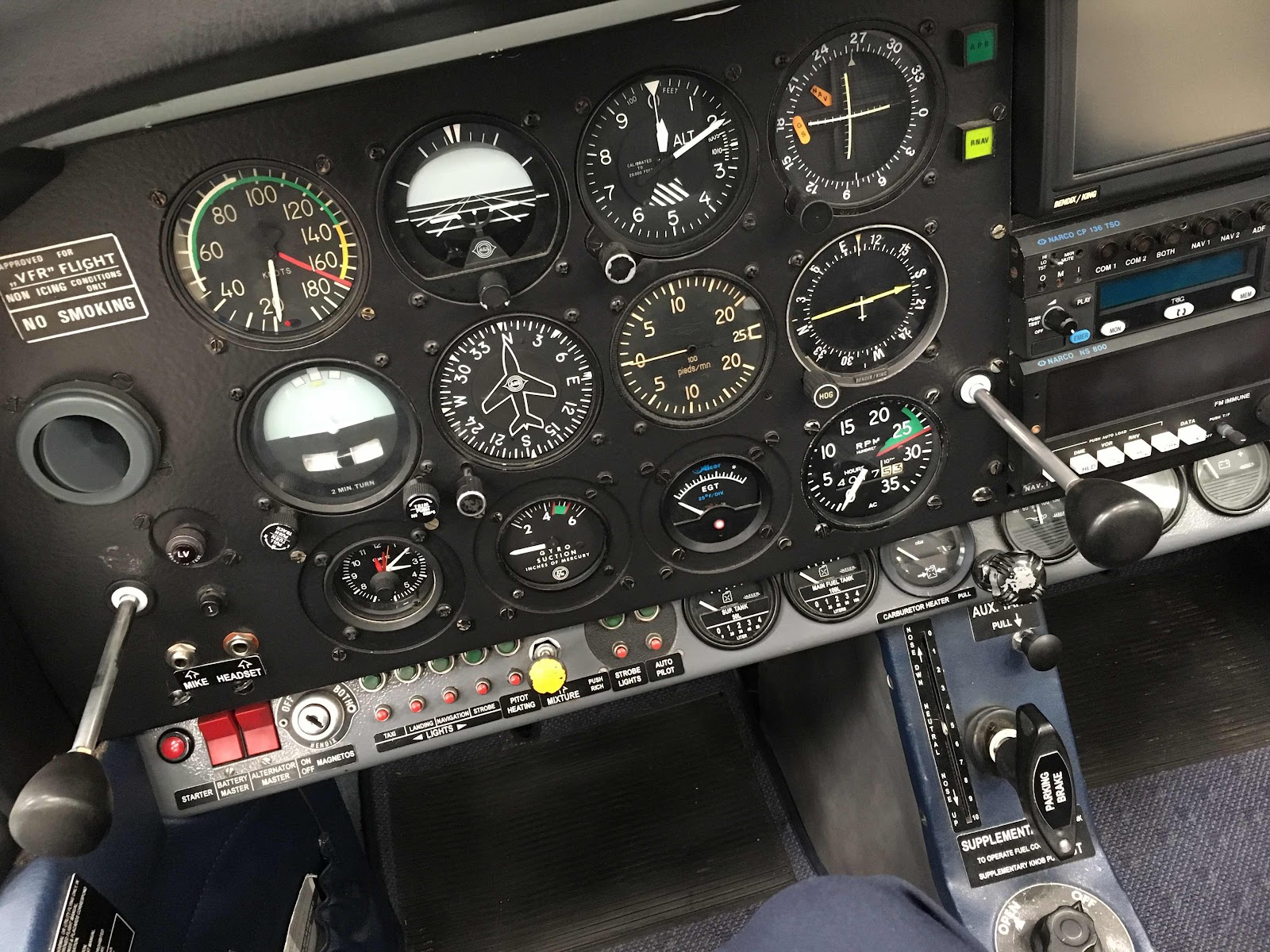
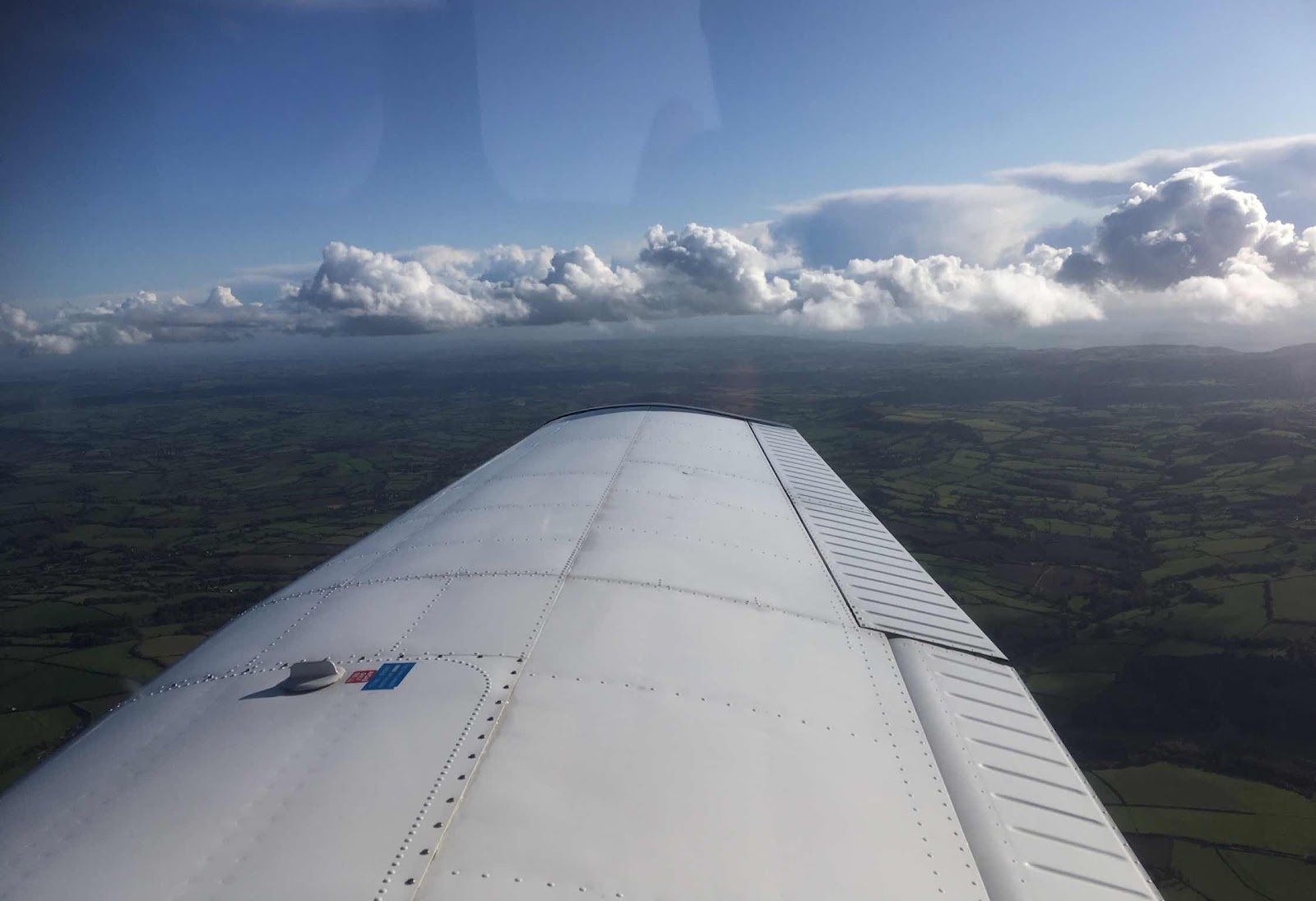
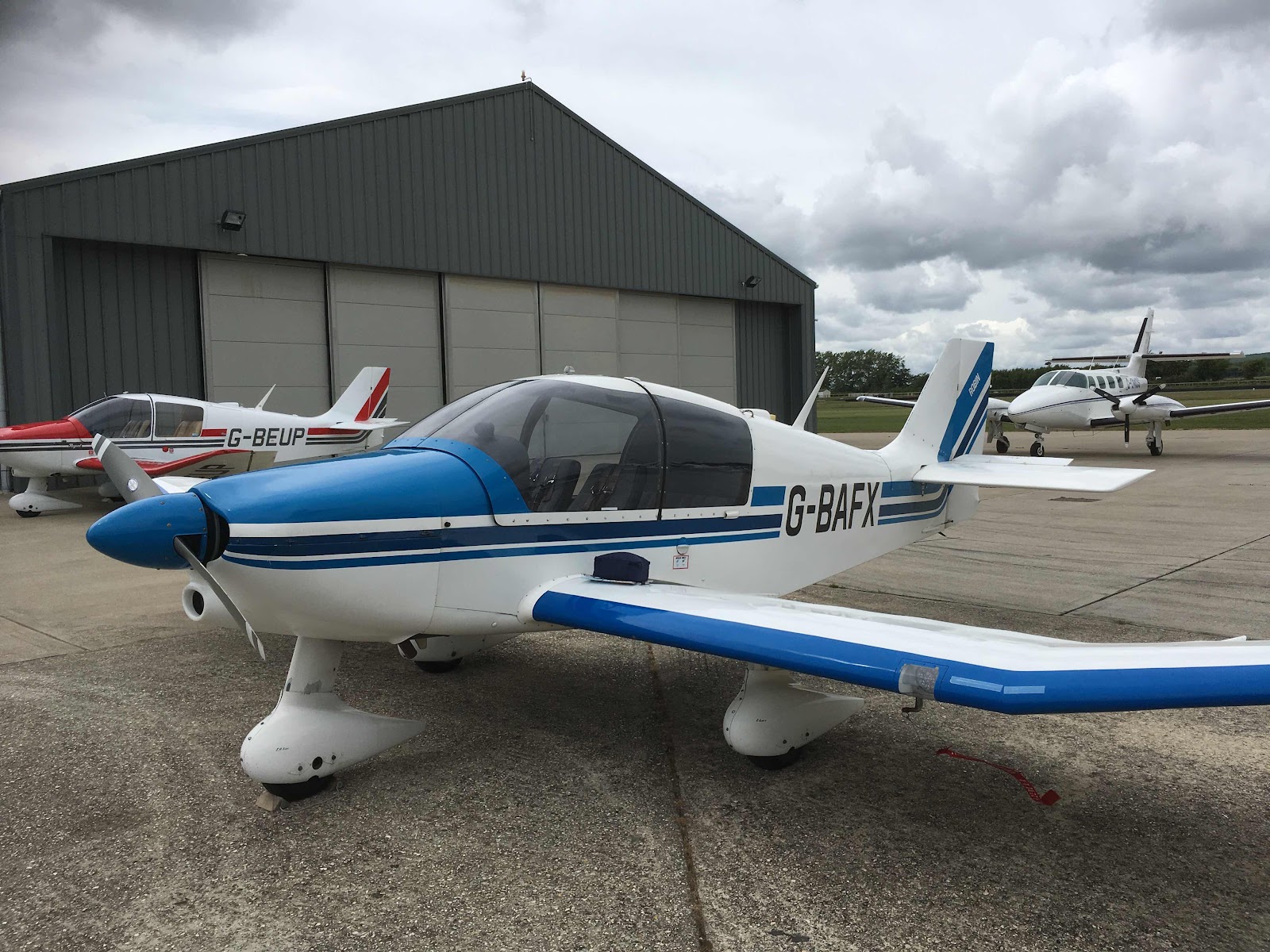
Earlier in Spring 2019, I enrolled at my chosen commercial flight training organisation with a view to commence the commercial flight training -MEP (multi engine rating)  and CPL (commercial pilots licence ) in October 2019. With this in mind, I needed to build the remaining PIC (pilot in command) hours towards the 100hrs needed before commencing the CPL. I had a plan of how and where I would fly to build these hours but I took the opportunity to fly a new aircraft type, the Robin DR400 pictured above, which was kindly offered to me by the owner to build the remaining hours. 


Compared to the G1000 glass cockpit of the school Cessna 172’s, the Robin offers  ‘traditional’ analogue instrumentation, which I wanted to gain more experience of before moving onto the analogue instruments of three PA28s at the commercial ‘big school’! It’s not a major difference but it would I thought it would benefit my instrument scan. The obvious differences being that it is a low wing aeroplane compared to the high wing Cessna and Piper Cub I had been flying up to this point plus a few different systems like the braking system -using the parking brake lever instead of toe brakes which I had become accustomed to previously. This Robin is a joy to fly, light responsive controls and an impressive cruising speed to build those much needed hours. 

Before setting off to hour build, I completed a checkout on the aircraft with the owner which comprised of some stalls -  demonstrating a fully developed stall and base turn to final configuration stall , steep turns, and a PFL. We flew in the local area to the east of Goodwood before joining the circuit for three touch and go’s. These included a normal circuit, followed by a flapless and glide to land. With the checkout complete, I could now go and forth and hour build, but first I had to go back to work, after spending a lunch break airborne! 

Later that night, I continued to read the aircraft POH (Pilots Operating Handbook) and set about planning future trips...


Tuesday, 7 April 2020

Update from inplaneview!


Hi everyone! I’m pleased to say that I’m still here and I endeavour to keep this blog, inplaneview  going after a very long hiatus! It’s been nearly two years!!

Since my last post, I finished my hour building, moved house and commenced and completed my commercial flying training, so in a nutshell I am now a proud owner of a CPL! I couldn’t be happier to achieved this goal, one which I had been working towards for a very long time! 

As I write, the global COVID-19 pandemic has unleashed chaos across the world, leaving the UK like many countries in lockdown! The country still managing to function thanks to all the hard work from all the key workers. Being at home, it has given me time to reflect on what I have done so far and time to resurrect this blog. The posts that will follow will take a little step backwards, ultimately picking up where I left off, documenting my journey from then to now...

Monday, 12 November 2018

Reflections from a Summer of aviating


Another late post, sorry! Since the last post, the past 3 months have been extremely busy at work thanks to the scorcher of a Summer .  I’ve managed to rack up more hourbuilding and I also got married to my beautiful wife! This post is another short one in the way of words, instead more pictures to illustrate a Summer aloft. Enjoy! 

No flying on this day! 

The forecast was correct! 

A quick trip to Sandown, Isle of Wight on a lunch break 

A morning of flying circuits after the low cloud stopped a planned Nav flight to Rochester, Kent 


Another trip to Sandown thanks to the free landing vouchers in Flyer Magazine! The view from the tower 


A hazy morning perfect for a local flight to practice PFLs (Practice Forced Landings) 


Tuesday, 17 July 2018

Summer of hour building continued...

The plotted route showing the westbound transit through Southampton towards the New Forest

Since my last post I’ve managed to get airborne on quite a few occasions thanks to the superb hot weather we’ve been experiencing lately. My hour building has been a mix of short navigation exercises coupled with plenty of circuits and some genberal handling for good measure! I also completed a Class D airspace zone transit through Southampton Airport’s overhead which was great to practice the RT (radio telephony) skills and fly a heading under radar control, I will certainly make zone  transits a regular occurrence in the upcoming hourbuilding. Above is a snapshot from my VFR chart showing my westbound routing through the zone. 

Crossing the 20 numbers whilst transiting Southampton’s overhead

Keeping a keen weather eye on that fog bank drifting off the Solent, just west of Beaulieu, New Forest 

Home! 

On another short navigation exercise I planned to fly a straight line between two points - Thorney Island and Four Marks, which was a very straight forward route, however I wanted to practice a drift correction method so I was purposefully slack in holding an accurate heading, allowing the aircraft to drift with the wind at 2,000ft. As I reached the half way point on the leg shown on the picture of my chart below I could determine how far in degrees I was off track, by which I then corrected for the drift by doubling the track error.  The purpose of this being to arrive back on the intended track at my destination, correcting the heading to offset the drift caused by the wind initially. 

Inversion Flying 


Thanks for reading, more trips to follow...

Wednesday, 23 May 2018

A Spring of aviating

After a wet March, April and May proved to be a lot drier, bringing some much settled weather suitable to ‘commit aviation’ in! 

Since my last post, (which I appreciate was a long time ago) I have been checked out and logged some flying hours in one of the flying schools Cessna 172 aircraft which is having its engine ‘run in’. The reason for this procedure occurs after an engine overhaul or cylinder replacement, the purpose being to house the piston rings inside the cylinder walls effectively- created by expansion through high pressures by operating the engine at high power settings. 
Flying this aeroplane for some hour building has been ideal for navigation flights of at least an hour airborne because the running in procedure avoids any activities using low power settings like stalling, circuits, or flights of less than 45minutes airborne. However, an engine which is running in is absolutely fine for navigation exercises flown at 2450rpm- and believe me, you get to your destination pretty quickly, covering some decent distance! 


Over the South Downs, dodging a few snow showers, this was my first ‘engine running in’ trip in GNXOE 

Whilst I’ve been getting back into the swing of hour building I’ve been able to cover exercises like diversions, VOR tracking, navigation using a chart and stopwatch and creating CPL style  PLOGs for each flight. I try to fly accurately to CPL standards- +/- 100ft for altitude keeping and within 5 degrees of desired heading on the DI. If I can try and fly to these standards and cover exercises from the CPL course now, it hopefully should make the transition to this next stage a little easier! 


A FlightRadar24 track of one of my navigation/ diversion exercises! 

My navigation trips have included the following; 

Goodwood - Washington Int VRP- Swanborough airstrip-Uckfield - various diversions - Plumpton- Goodwood ( it helped sharpen the navigation skills by choosing small villages or private farmstrips which can be difficult to find!) 

Goodwood-Dorking- Goodwood - tracking both the MID (Midhurst) and GWC (Goodwood) VORs 

Goodwood-Uckfield - Tunbridge Wells VRP - Bough Beech Resr- M25/M23 Junc VRP - Guildford- MID VOR- Goodwood ( an anticlockwise nav around the Gatwick zone ) 

As well as a few local flights and a few sessions of  circuits thrown in! More trips to follow, thanks for reading!


Amongst the hourbuilding, I’ve had a few trips in the Super Cub too, great to get some tailwheel exposure again, I plan to do more flying in the Cub as part of the hour building 


Sunday, 4 March 2018

Crosswind check-out


Preflight checks before heading off from Lee to Goodwood 


As hoped, February brought drier and much colder weather, enabling many people myself included to get airborne again. As part of a repositioning exercise, we had to fly one of our flying school aircraft back to its home airfield, I was able to combine this with a currency checkout flight in the Cessna 172. As luck would have it, on this particular day the wind was a sporty northerly- ideal for some crosswind circuit practice at both Lee-on-Solent and Goodwood  which both  have roughly east-west runways. I was glad of this as I wanted to focus on these with a patient instructor sat next me! 
We took off from Goodwood in the ferry aircraft, three on board- me and two instructors - one instructor to ferry the aeroplane back, the other for the check out flight. I flew both legs and experienced a very soft field crosswind takeoff from runway 28 at Goodwood. This was a good experience for me as it was something I haven’t done in a while- keeping the control column back to keep the weight off the nosewheel, intowind aileron - progressively moving the control column back to neutral as airspeed builds. To measure takeoff performance, I’d planned that if I wasn’t at 70% of my rotation airspeed by the midpoint of the runway- I would abort the takeoff. Luckily this wasn’t the case and we lifted off, pushing slightly forward on the control column to let the aircraft build airspeed in the climb. 

Passing north abeam Portsmouth enroute to Goodwood- picture credit to flying instructor Charlotte Dadswell 

The flight to Lee was uneventful, joining downwind for runway 05 for a rather surprising smooth crosswind landing! After a quick aircraft swap we fired up and flew three circuits before heading back to Goodwood. I needed these to satisfy the CAA currency rules before taking up passengers- 3 take offs and landings within a 90 day period. This was a good exercise to practice crosswind circuits, adopting the crab method all the way down to the roundout for landing. This involves using rudder to point the nose of the aircraft into wind all the way down the approach to counteract any drift. Upon the roundout, I apply rudder in the opposite direction of the previous input to point the nose straight-inline with the runway centreline and apply into wind aileron to prevent any drifting caused by the ‘sideways acting’ wind! 

It was highly beneficial to get some practice on these and hopefully use them often to keep the skills sharp. My next trip will involve another checkout flight to fly one of the flying school Cessnas which is having its recently overhauled engine ‘run in’. 

Till next time, thanks for reading...


Sunday, 4 February 2018

Not so much a ‘dry January’....

Another day of ‘no flying’...

Well what can I say? I know I’m not alone when I say I miss flying! It’s certainly the talk and frustration shared amongst the flying types I rub shoulders with everyday....the weather! But it was January after all and any flying this time of year is a bonus! It has meant that I can spend time thinking about how to structure the hour building and get inspiration on new airfields to visit. It’s been a while since I last flew so it’s going to take a few refreshers to shake the rust off and get current again, so I plan on getting current on one of Goodwood Flying School’s Cessna 172S’s an aeroplane I learnt to fly in some eight years previous! A steady mix of genberal handling, PFLs and a stack of circuits should certainly help, I hope to cover some crosswind circuits too as you can never practice them enough! 

Anyway that’s about it for now, I (and everyone else) is hoping for a drier and more settled February so hopefully I can get airborne again, once the flying gets going again the posts should be more frequent crammed with more content so stay tuned! 

Thanks for reading 

This sight greeted me upon arrival at work one morning. It shows a very shallow layer of radiation fog blanketing the airfield. It forms when the land cools overnight and subsequently cools the air immediately above its surface. As this air cools it condenses and looses its ability to hold moisture so it forms condensation and fog occurs. It normally burns off once the sun gets to work on it, but it was particularly slow to clear in some places on this day in early January! 

Thursday, 26 October 2017

Hour building-Local area nav


Preflighting KH, a beautiful calm dewy autumnal morning. 

As a gentle introduction back to hour building I thought I’d take the trusty PA38 Tomahawk ‘KH up for a local area navigation flight from Goodwood to Goodwood via a lap around the Isle of Wight. I planned the route via the following waypoints; Goodwood-Southsea-St.Catherines Point -The Needles -Cowes-Southsea -Goodwood, the route taking around 51minutes with the forecasted winds. 


Cruising over towards the Solent, Portsmouth -Hilsea and Copnor can be seen from the starboard wing as pictured 
Overhead my turning point at St Catherine’s Point, turning onto a heading towards the Needles 

The flight went well, the timings and headings made during planning matched the actual plog which is always satisfying. As well as aiming to fly to CPL standards in preparation for the CPL, the preflight planning of the route is just as important and I take time to fill out a plog as its good for practice and vital for a successful flight! I obtained a basic service from Solent Radar which again was beneficial to practice those RT skills! 
Needles 1’o clock! 

Inbound back to Goodwood, part of Gosport and Portsmouth- the new aircraft carrier HMS Queen Elizabeth can be seen to the left of the Spinnaker Tower. A possible site for a forced landing.....?! 

Following this flight I plan to build up the complexity of routes and landaways, I’m away on holiday in November so will be looking to carry on in December onwards! 

Till next time, thanks for reading 


Wednesday, 13 September 2017

Hour building -'resumed'

Myself before a checkout flight in 'KH- photo courtesy of John Richardson 

Since completing the ATPLs earlier this summer it meant I had the 'fun' bit left to do...jump into an aeroplane and finish off the hour building!! After speaking to friends at the flying school, reading various books and advice from the Wings Alliance, I had a rough idea/plan of how I am going to build the hours constructively- and not just burn holes in the sky (and my wallet) flying in the local area...

I need to build a further 42hrs of PIC ( pilot in command ) time which realistically will be spread over the next year in chunks due to financial restraints and other commitments. During my ATPL study I flew very infrequently so my flying skills are 'rusty' but this was to be expected! I have been taking advantage of flying dual with an instructor during checkouts on various aircraft which is helping me build confidence and gain valuable experience, learning new things every time . As I write this I'm half way through a checkout on the beloved 'KH- the group shared PA38 Tomahawk and also fully checked out on the Cessna 172-the aircraft I learnt to fly in and incidentally based where I work now- the flying school. I'm also keen to build further hours on the school owned Piper Cub- gaining some hugely beneficial tailwheel time. This will do wonders for sharpening my flying and handling skills! 

I promise to be more frequent with the future posts, next time I'll report on my recent trips and jot down my rough hour building plan! 

Thanks for reading 

R

Monday, 19 June 2017

ATPLs..The Final

Since I last wrote, a lot has happened. It was the last 4 weeks before undertaking the Module 3 ATPL exams - principles of flight, performance, operational procedures, mass and balance and VFR/IFR communications, and the revision was ramping up. Since then, I've attended the revision brush up week at BGS in Clevedon and sat the final exams in the following week. 


Bristol Ground School brush up week- lesson on Performance 

Module 3 for me was a mixed bag, some very intense subjects like Principles of Flight or Performance alongside some less intense subjects like Communications or Operational Procedures, I sat the six exams over three days and felt I'd done ok all except Mass and Balance. During the mock tests I was taking I was scoring high for Mass and Balance so I was reasonably confident the 'real thing' would be similar. No. It was far from it! Lots of reworded new questions requiring lengthy calculations which meant I failed to finish the exam in time, I walked out of that exam room feeling I would be very lucky to have passed it...


A study distraction or inspiration? During my second week during the exams I stayed in a super cottage just a stone's throw from Bristol Airport so jet noise nearly constant! This was my view from the hallway roof window. Definitely an inspiration during long long hours of revision 

Results day loomed and I was pleased to say I passed all except that doomed mass and balance exam! I wasn't too surprised, it was toughest exam to date and my gut instinct didn't fill me with optimism! Was I unprepared, too tired ( it was the last day, second to last exam), complacent, or misreading the questions? Who knows, I'm not one to make excuses! 

I was happy with all other results so I just saw the positive through the failure and worked hard to revise further and practice as many mock tests and questions as possible. I was determined that I would pass the exam second time around! I booked the resit for two weeks later at the CAA at Gatwick as I was keen to get it done whilst my brain was still engaged in 'study mode' , before I forget it all! 

 
Revision fuel- coffee and biscuits

Exam day arrived and I made my way to the CAA at Gatwick. I signed in and nervously waited to enter the exam room. Time soon passed and before I knew it I was into the exam working my way through it, quickly but accurately! I managed to finish in time with 5 minutes to spare so I triple checked all answers and felt I'd given it my best shot. I vacated the CAA feeling like I'd done better but unsure how much better as it was another tough one! 

Luckily by taking the exam on the Thursday meant I had to wait less than 24hrs until results day. After an anxious wait I was greeted good news.  I opened the email at work, I had passed! And passed well with 90%! I was ecstatic and it took a while for it to sink in! Not only was this a pass but it was monumental as it marked the last of all 14 ATPL exams!! 

All of that study and revision that had completely taken over my life was now complete! It was like turning off a switch! Obviously this is just a small step on a long ladder to reach my goal so I know study will never be too far away, and as they say in aviation-you never stop learning. 

Throughout my study I'd like to thank my fiancé Char who stood by me my all the way through it and has had to put up with me studying away until late in night, on days off and even during some holidays! It goes without saying that I'm thankful to all family and friends and colleagues and customers at work for their support and encouragement. Lastly my success in passing all ATPLs would not have been possible without the superb tuition, content and support from everyone at Bristol Ground School, I can't recommend them highly enough! I'm thankful for the opportunity both The Air League and Bristol Ground School gave me when I was presented with the ATPL scholarship in 2005, without them, I wouldn't be where I am now...
 

The next step involves me climbing back into an aeroplane and building hours....! 

Till next time, thanks for reading 


Sunday, 23 April 2017

1 month to go...

It's exactly one month today until I sit the first of the final six exams for Module 3. My lack of posting recently is a sure sign of the level of revision I'm undertaking! Lots of early mornings, late nights and revision crammed lunch breaks at work and many more to come! 

 I feel the revision is going fairly well, I've got a structure in place to follow over the weeks so it means that each subject gets an equal amount of  attention, I've structured it so that it will be a mix of exam questions, timed exams and re-reading the manuals. I've found that re-reading certain topics is highly beneficial as I've understood things better and been able to get my head around certain subjects areas once studying them a second time around. 

From what I've gathered from friends who have just completed Module 3, it certainly pays to gain a really good understanding into some subjects like Principles of Flight (PoF)  and Performance rather than just familiarising yourself with questions. I enjoy PoF and find the content interesting, but need to spend time practicing more and more exam questions. Mass and balance is quite systematic but again, I need to practice more and more as the time restraints will be a concern in the exam! 

Anyway till next time, thanks for reading 

Wednesday, 1 March 2017

Graphs and diagrams


Just another quick update from me with regards to the ongoing Module 3 study. I've now completed all the required reading for VFR/IFR Comms, Mass & Balance and Operational Procedures, next up is pure revision for them! 

As the title suggests, I'm confronted with more and more diagrams and graphs for subjects like Principles of Flight (POF) and Performance whether it being force diagrams or lift/drag graphs. I'm really enjoying POF, which surprised me, maybe because it's interesting and I can relate it to my 'physical experience' of flying an aircraft. I have a little more to read for these two subjects then it will be onto revision as per the other subjects 

I also booked my exams earlier in February with the plan to take them at the end of May. I was quite shocked at how the sittings were already being booked up, so I had to act fast! It also meant paying for them in advance so six exams at £68 wasn't a pleasant welcome to the bank account! Anyway, atleast I can rest in confidence that they are all booked, just now to revise and prepare! Time to go to town with post it notes and flash cards!!

I'll try and update sooner next time, as always thanks for reading :) 


Thursday, 26 January 2017

The final push-Module 3

Firstly happy new year! 26 days in, not sure I can still get away with saying that!  Anyway first post of 2017 so here goes...

Going back to the end of last year, after a tense wait before Christmas I received those valuable emails from the CAA, it was results day! Luckily all Module 2 subjects passed - Aircraft General Knowledge, Air Law, Flight Planning and Radio Navigation. This was a great relief and thankful yet again to Bristol Ground School for this success! 

After a few days off for Christmas, I then started the reading the content for the final 6 exams. I set myself a deadline and booked the brush up revision week at Bristol Ground School for the end of May, giving myself sufficient time to study for the following final exams; 

- Performance 
-Principles of Flight 
-Mass & Balance 
-Operational Procedures 
-IFR Communications  
-VFR Communications 

The study is so far going well, and I've now got an appreciation of the more harder subjects and the easier ones. Performance and Principles of Flight seem quite mathematical in places whereas Ops Procedures is fairly factual based, IFR and VFR Comms was completed in a week!  

So back to the books I go, until next time...

Friday, 30 December 2016

2016-An airborne review

As 2016 officially ends tomorrow, I thought I'd share a few moments from the year relating to all things aviation, in no particular relevant order! Enjoy and once again thank you for your support and continued following of In Plane View, more of the same for 2017!  Happy New Year! 

 
In the cruise on way to Hurghada ,Egypt, for a post exam holiday, onboard a Thomson Boeing 737-800
Looking smug after first Aeros flight in the Harvard
Looking smug after my first aeros experience in the Harvard 
  
DC3 appearing at the Goodwood Revival 
 
The Needles, IOW pictured during an engine run-in flight in a Cessna 172


Prior to boarding to Vancouver on Air Transat Airbus A330-300, surprise holiday from my girlfriend! 
 
In the cruise overhead Greenland, Gatwick to Vancouver 
 
Downtown Vancouver Seaplane terminal 
 
Prior to boarding a DHC-2 Beaver seaplane for a short flight around Vancouver, really exciting! 
   
A few shots of the DHC-2 cockpit display 
  
Head in the charts...ATPL study in progress, Flight Planning and Monitoring to be precise! 
 
A frosty start to the day at the flying school, two Cessna 172s at rest before a busy day 
 
In the climb out from Goodwood, Chichester in view. Onboard a PA38 

 
Myself looking super smug again after soloing the Piper Super Cub for the first time during my tailwheel conversion in August.